

Does Homeowners Insurance Cover Water Damage? What Is and Isn't Covered
Usually yes, if the damage was sudden and accidental. A standard homeowners policy (HO-3) normally pays to repair water damage from a burst pipe, a failed water heater or an overflowing appliance. It usually does not pay for damage from a slow leak that was ignored, for flooding from outside the home, or for sewer backups unless you added that coverage. Every policy is different, so check yours and call your agent if you are not sure.
What homeowners insurance usually covers
- Burst or frozen pipes. Water that escapes suddenly from plumbing inside the home.
- Appliance failures. A water heater, washing machine, dishwasher or refrigerator line that breaks or overflows.
- Roof leaks after a covered event. Rain getting in after wind, hail or a fallen tree damages the roof.
- Water used to put out a fire. Damage from fire hoses and sprinklers is normally part of the fire claim.
- Accidental overflow. A bathtub or sink left running.
Coverage normally includes drying the home, removing damaged materials and making repairs. Many policies also pay for your belongings and for a place to stay if the home is not livable during repairs.
What it usually does not cover
- Floods. Rising water from storms, overflowing rivers or storm surge needs separate flood insurance, through the National Flood Insurance Program or a private insurer.
- Slow leaks and neglect. Damage that built up over weeks or months, like a dripping pipe under a sink or a roof that leaked for a season.
- Sewer and drain backups. Often excluded unless you bought a water backup endorsement. It is an inexpensive add-on worth asking about.
- Groundwater seepage. Water coming up through a foundation or basement floor.
- Mold from long-term moisture. Many policies cap mold coverage at a low amount or exclude it unless it came from a covered water event.
Covered or not: common situations
| What happened | Usually covered by homeowners insurance? |
|---|---|
| Pipe burst in the wall during a cold snap | Yes |
| Water heater split and flooded the basement | Yes, the water damage. The water heater itself often is not. |
| Washing machine hose broke | Yes |
| Storm surge or river flooding | No, needs flood insurance |
| Sewage backed up through a floor drain | Only with a water backup endorsement |
| Slow leak under the kitchen sink for months | Usually no |
| Roof leak after a tree fell on the house | Usually yes |
How to file a water damage claim
- Stop the water. Shut off the main water valve and, if it is safe, the power to wet areas.
- Document everything. Take photos and video of the damage before anything is moved or thrown away.
- Call your insurance company. Report the loss as soon as possible and write down your claim number.
- Prevent more damage. Policies expect you to take reasonable steps to stop the damage from getting worse. Calling a restoration company right away counts, and the cost of emergency drying is normally part of the claim.
- Keep receipts. Save receipts for emergency repairs, hotel stays and anything you buy because of the loss.
- Meet the adjuster. Walk them through the damage and share your photos and the restoration company's moisture readings.
How a restoration company helps with the claim
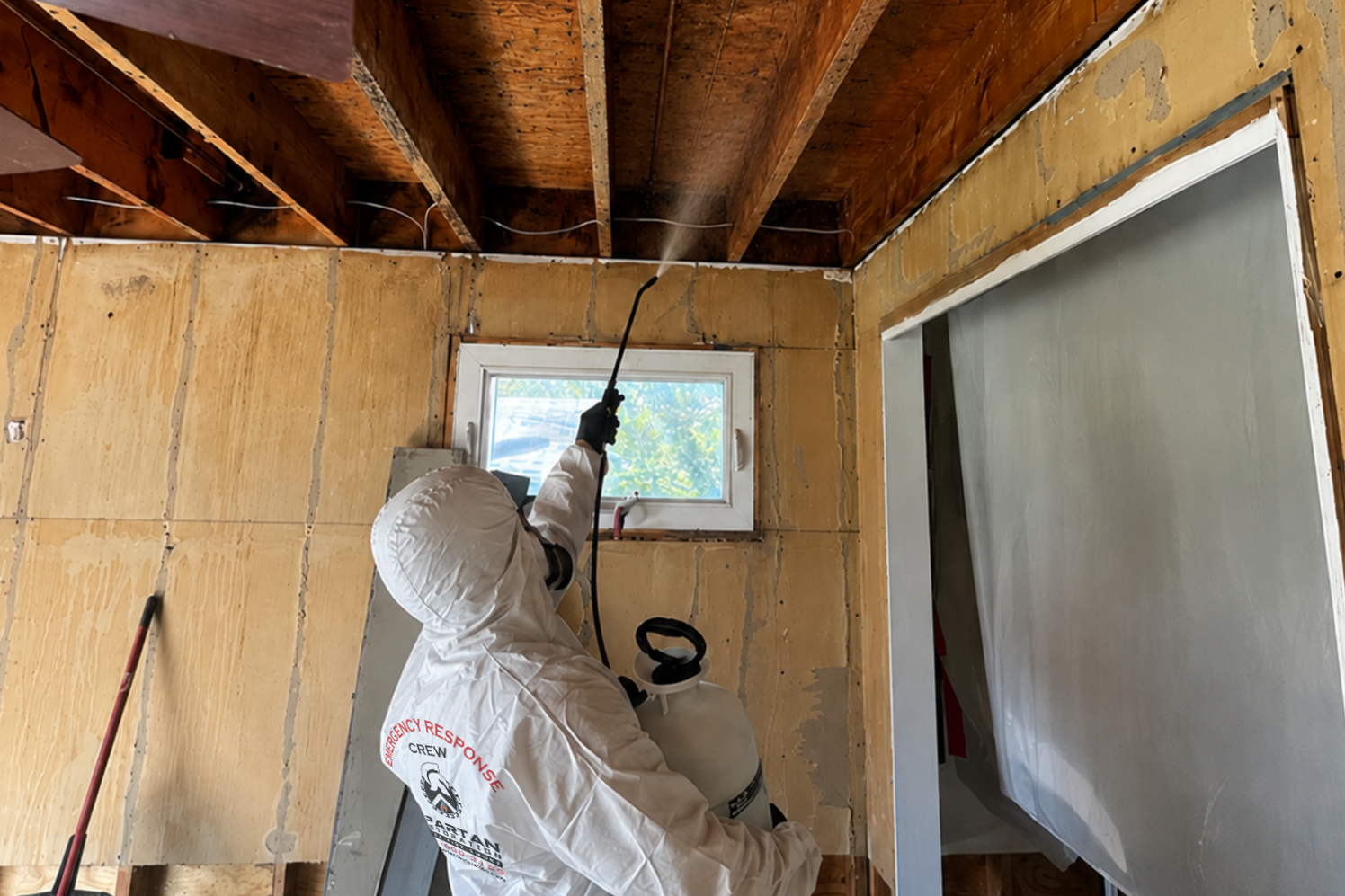
Insurers pay for what can be documented. A restoration company records moisture levels, takes photos at every stage and writes up the scope of work in the format adjusters use. Spartan Restoration works directly with insurance companies, documents the damage from the first visit and can bill the carrier for you, so you only pay your deductible on a covered claim. Learn more on our insurance claims page.
Related guides
- How much does water damage restoration cost?
- What is insurance restoration?
- Water damage restoration services
Dealing with water damage now? Spartan Restoration offers 24/7 emergency response across Long Island, New York City, New Jersey, Connecticut, Massachusetts, Maryland, Delaware and Utah. Call 631-250-1142.

.jpg)